 English
 العربية

Showroom Relocation in Dubai
Showroom Relocation in Dubai
Moving a showroom is not like moving an office with better lighting. A retail shop moves stock in boxes and rebuilds shelves at the other end, but a showroom is the display itself: vehicles on polished floors, glass showcases, illuminated brand walls, fixtures installed to be looked at, not carried. Add that every closed day is a day without footfall, and you see why showroom relocations in Dubai are planned like small military operations, usually at night.
Here is how a car or luxury showroom move actually runs, and what to ask before you book one.
Why Showrooms Are a Different Kind of Move
Three things make showrooms special. The displays are fragile in expensive ways: a glass showcase does not forgive a trolley clip, and a backlit brand wall has wiring and finishes that must come apart in sequence. Many showrooms hold vehicles, which means ramps and slow, guided movement rather than lifting. And the fit-out belongs partly to the brand, so the crew is dismantling and rebuilding a designed space, not just moving furniture.
That is why a showroom move starts with a survey, not a phone quote. A proper survey lists every display element, notes which units dismantle and which travel whole, and flags anything the brand’s own fit-out team must handle. Our commercial survey process is the same one we use for office relocation in Dubai, adapted for display environments.
Planning Around Trading Hours

Most showroom moves in Dubai happen in slices. Non-essential displays and back-of-house stock move first, during quiet hours. The main floor moves after closing, often across two or three nights, so the showroom can trade until the last possible day and reopen at the new site on the promised morning.
Building management is part of the plan. Malls and towers control service lifts, loading bays and working hours, and many only allow noisy work at night. A realistic schedule builds those windows in from the start. If your showroom sits inside a mall, allow extra time for permits and lift bookings, they decide your timetable more than the distance does.
Moving the Cars and Heavy Displays
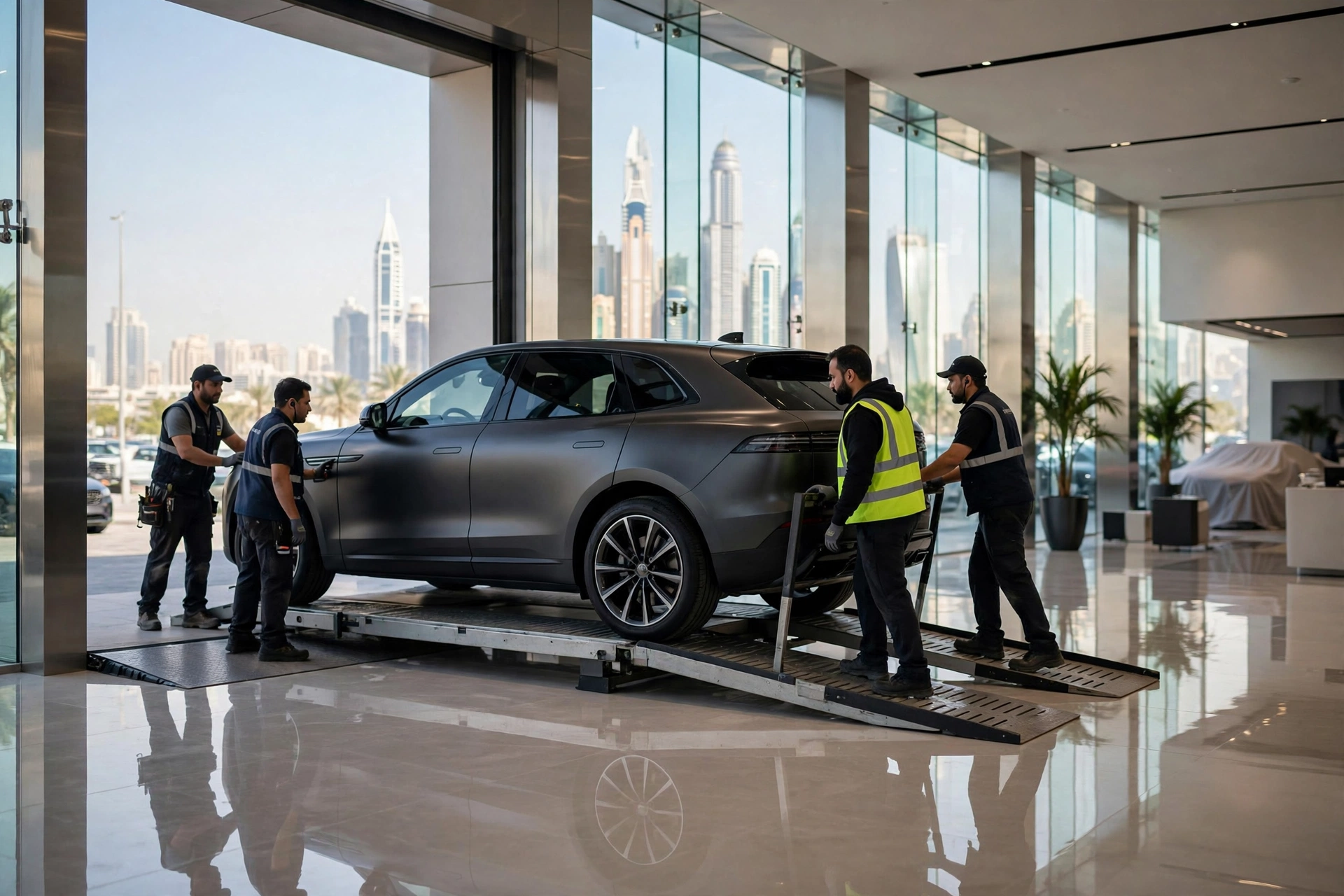
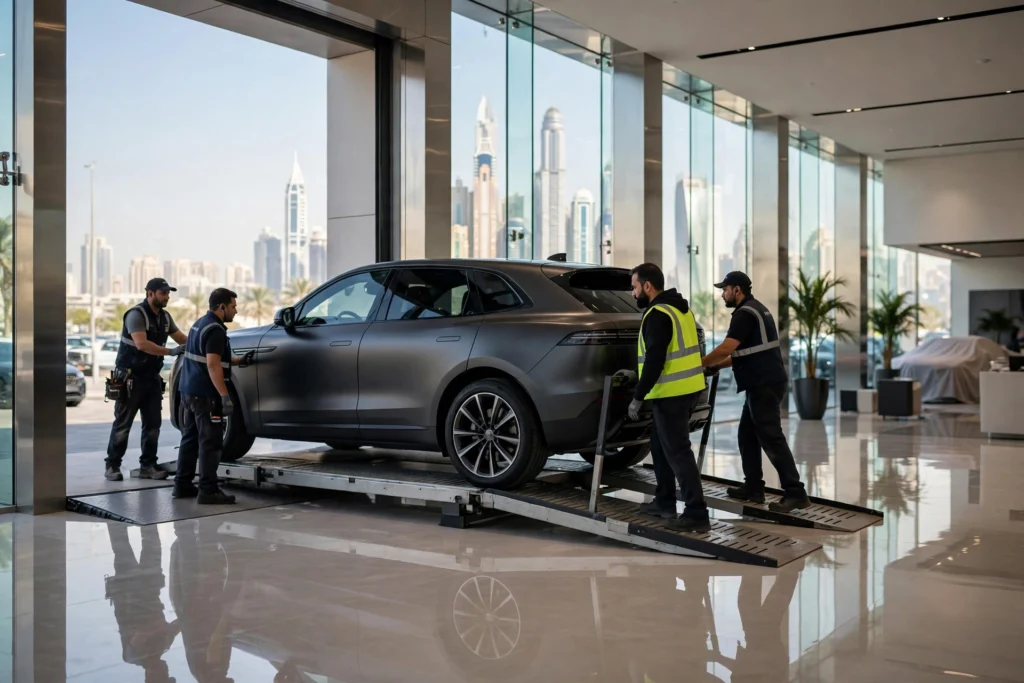
Vehicles move on ramps, dollies and patience. Floors are protected end to end, corners are spotted by a second pair of eyes, and nothing is rushed, because a scuffed bumper costs more than an hour of care. Heavy plinths and stone counters travel on skates or with extra crew, and anything with a polished face is wrapped before it moves a metre.
Glass showcases get the full treatment: emptied, wrapped in blankets and film, and carried vertically where the design allows. Illuminated walls are photographed before dismantling, connections labelled, and panels packed flat in order so the rebuild follows the photographs instead of guesswork. It is the labelling discipline described in our guide to retail shop relocation in Dubai, taken further because display units rarely come with manuals.
Packing That Protects the Brand, Not Just the Furniture

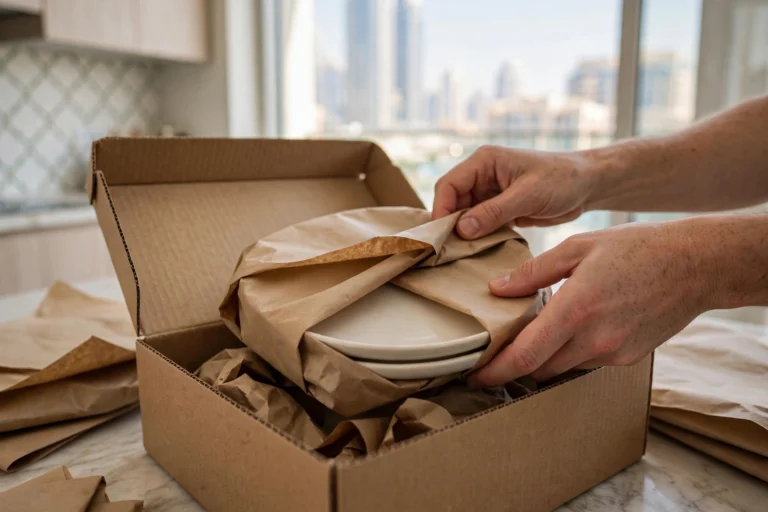
In a showroom, how things look on arrival matters as much as whether they arrive. Brand fixtures travel wrapped and separated so finishes never rub, screens are packed with their cables and remotes kept together, and small items like keys and display cards go into labelled pouches rather than a general box.
Fragile stock is packed by the same crew that will unpack it, which sounds obvious and is routinely skipped by cheap operators. Our packing and unpacking team works this way on commercial moves: the person who wrapped a showcase should be the person who unwraps it.
The Move Sequence That Works
In practice, the order is simple. Survey and inventory first, with photographs of every display. Back-of-house areas second. Secondary displays third, keeping the main floor trading. Vehicles and hero displays last out and first in, so the new showroom looks like a showroom from the first morning. Then the rebuild: display walls, lighting, showcases, and finally the detail work and a walk-through with your checklist in hand. If heavy stock moves between sites too, combining the booking with our loading and unloading services keeps one crew responsible from the old floor to the new one.
Relocating a showroom in Dubai and want a plan built around your trading hours? Call us on +971 56 756 2182 and we will survey the space and give you a night-by-night schedule before you commit to dates.
Frequently Asked Questions
Can a showroom move happen without closing for extra days?
Usually, yes, if it is planned in slices. Back-of-house areas and secondary displays move first, and the main floor moves after closing across one or more nights. The exact pattern depends on your mall or building rules, which is why the schedule is built around their service-lift and working-hour windows.
How are cars moved out of a showroom?
Vehicles are guided slowly over protected floors using ramps and dollies where needed, with spotters at corners and doorways. They are driven or rolled the shortest safe route to the loading area, never rushed, and floors are covered end to end before the first car moves.
Who dismantles illuminated display walls and brand fixtures?
The moving crew dismantles standard display units after photographing and labelling every connection, then rebuilds them at the new site in the same order. If your brand has its own fit-out team for certain elements, the survey flags those pieces so both teams know exactly where their work starts and ends.
What should we prepare inside the showroom before moving night?
Empty the showcases, gather remotes, keys and display cards into labelled pouches, and decide which displays are hero pieces that must be first into the new space. Your crew handles wrapping, dismantling and transport. A short walk-through together before the first night prevents most misunderstandings.