 English
 العربية

How to Pack Fragile Items Like a Pro: Dubai Movers’ Secrets
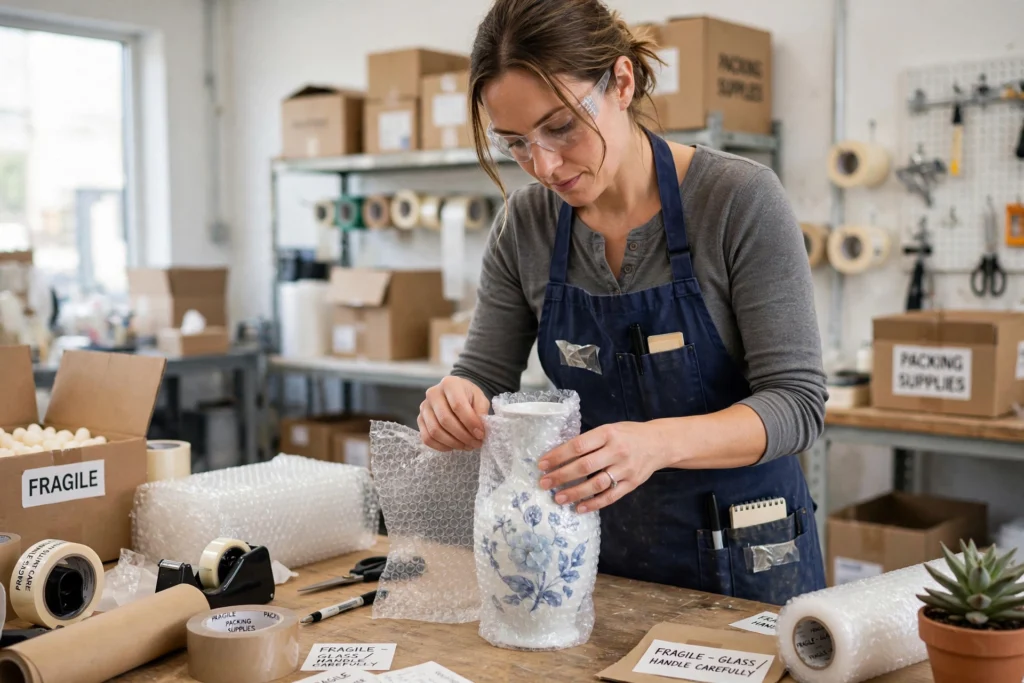
Broken glasses, cracked mirrors, scratched artwork — moving damage almost always hits fragile items first. The difference between a heartbreak and a perfect move is rarely luck. It is technique: the right materials, the right method for each shape, and knowing which pieces are worth handing to a professional packer. Here are the methods professional packers in Dubai use every day, explained so you can use them yourself.
Start with the right materials
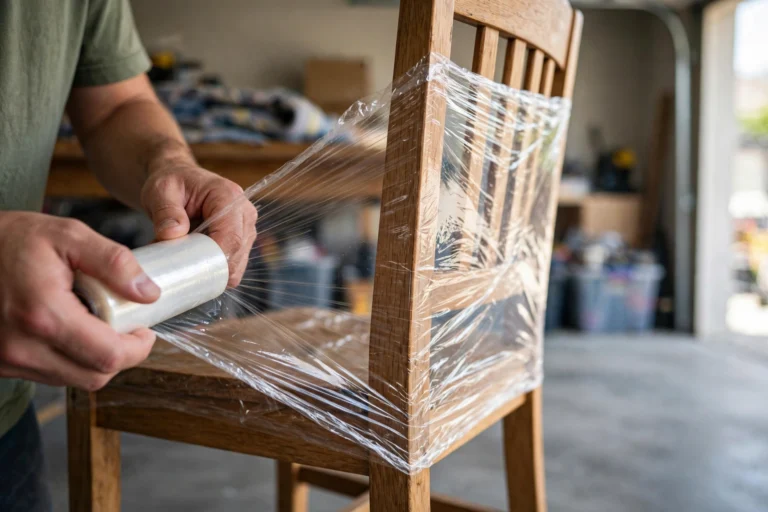
Newspaper seems convenient but the ink transfers onto everything and it offers almost no cushioning. Professionals use bubble wrap, plain packing paper, foam pouches and double-walled boxes. For truly valuable items, custom wooden crates are worth the trouble. Do not skimp on materials — they cost far less than replacing what is inside. Gather everything before you start: a packing table at waist height, a roll of packing paper, bubble wrap, tape, a marker, and boxes in several sizes. Packing fragile items on the floor with the wrong box is how most accidents begin.
Choose the box for the item, not the item for the box. A small, sturdy box packed tightly is far safer than a large box half-filled with fragile things rattling around. Line the bottom of every fragile box with a thick layer of crumpled packing paper — that layer is the cushion that absorbs the first bump. And keep one rule from the start: heavy items at the bottom of the box, light and delicate items on top, and never mix fragile pieces with heavy books or tins in the same box.
Glasses and cups: wrap each one, then separate them
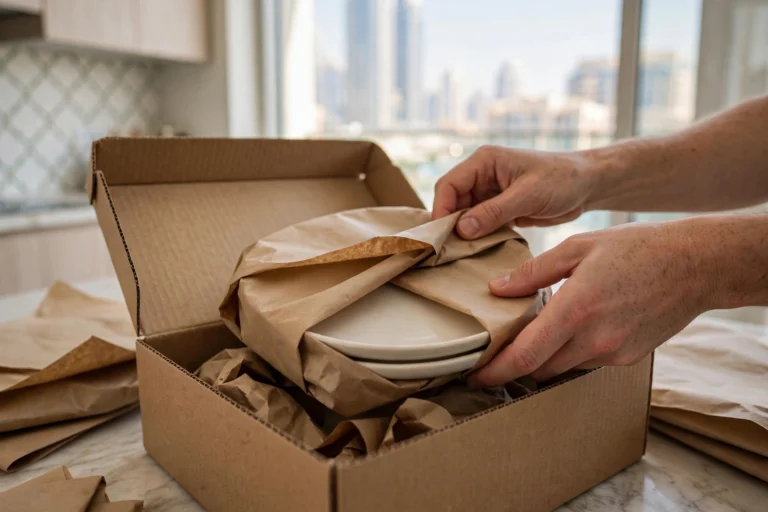
Wrap each glass individually in packing paper, tucking the paper inside the rim so the hollow is supported, then place them in a box with cardboard dividers — the cell kit that keeps each glass in its own compartment. Never stack glasses inside each other without padding between them, and never leave a gap: fill every space with crumpled paper, because movement inside the box is what causes breakage. The box should feel firm when you press the top, not hollow.
Stemmed glasses deserve extra care. Wrap the stem and the bowl separately, with a little extra paper around the join, and stand them upright in the cell kit rather than laying them down. Mugs can be nested only if each one is wrapped and a layer of paper sits between them. Label the box on two sides, top and side, so the crew can see it without turning the box around.
Plates and bowls: stand them up, do not stack them flat
This surprises most people: plates are stronger on edge than flat. Wrap each plate in packing paper, then stand them vertically in the box like vinyl records, with padding between each one. A stack of flat plates concentrates every bump onto the bottom plate; plates on edge share the load and survive the journey far better. This one change prevents most plate breakage.
Bowls follow the same idea in reverse: nest them only with a sheet of packing paper between each bowl, and never nest more than three or four together. Put plates and bowls in separate boxes if you can — a mixed box is heavier, and weight is the enemy. When the box is full, add a layer of crumpled paper on top before taping it shut, so nothing can shift upward.
Mirrors and artwork: the X-tape trick and corner protection
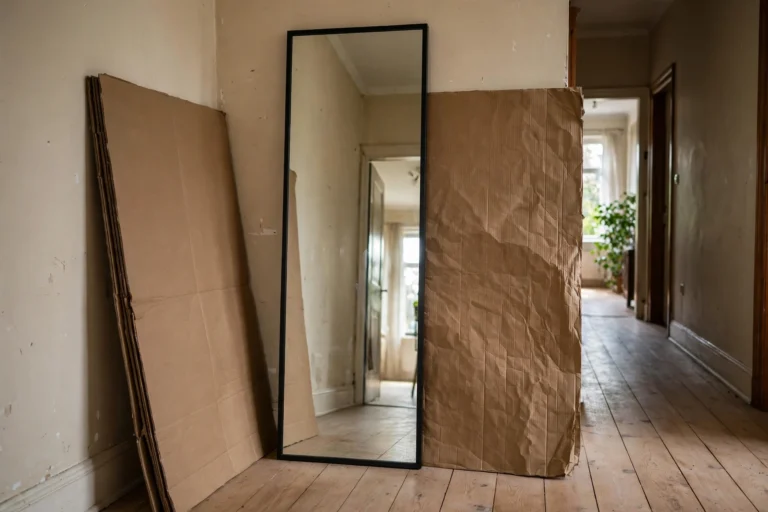
Put masking tape in a large X across the glass surface of a mirror — if it breaks, the tape holds the shards together instead of scattering them. Then wrap the whole piece in bubble wrap and slide it into a mirror box, the tall flat box made for exactly this. For framed art, add corner protectors before wrapping; the corners are the first thing to catch on a doorframe or a lift wall, and a dented corner is often what ruins the frame.
Never lay a wrapped mirror flat with weight on top of it. Mirrors and framed pieces travel upright, leaning against a wall of the truck or strapped to the side, and they should be loaded last and unloaded first so nothing is stacked against them. If a piece is large or has a glass front wider than your doorway, tell the crew before moving day so they plan the route out of the room.
Electronics and screens: original boxes win
If you kept the original box for your TV or monitor, use it — it was designed for exactly that screen, with moulded supports no improvised packing can match. Otherwise, wrap screens in anti-static bubble wrap, since regular bubble wrap can cause static damage, and never lay a flat-screen TV face-down. Screens travel upright, with the face protected and nothing pressing against it. Our notes on TV packing and transport and electronics packing in Dubai cover the details for larger setups.
Before unplugging anything, take photos of the cable setup from two angles so reassembly is easy. Coil every cable and keep each device’s cable with the device — a single “cables” box sounds efficient and guarantees a frustrating first evening. Laptops and tablets should travel in your own car in a padded bag, not in the truck, and small items like remote controls and chargers go in a labelled pouch inside the box they belong to.
When to let professionals handle it
Some items are genuinely risky to pack yourself: chandeliers, large mirrors, marble tabletops, fine art, and anything with a value that would be devastating to lose. Professional packers have the materials and the practice to pack these safely — custom crates, proper corner protection, and the habit of measuring the route out of the room before lifting. If an item would be devastating to lose, let the pros pack it, and ask them to show you how it is wrapped so you know what to expect at the other end.
The same applies to anything awkwardly shaped or top-heavy. A tall vase, a sculpture, a glass-topped table: these need more than bubble wrap, they need a box built around them and a plan for how they ride in the truck. Our packing services in Dubai cover exactly this work, and anything that has to come apart first is handled by our furniture dismantling service, with the fittings kept with the piece.
Labelling and loading: the part everyone rushes
Label every fragile box clearly on all sides with the word fragile and the destination room. “Fragile — kitchen, glasses” tells the crew everything; a blank box tells them nothing. Keep fragile boxes together on the truck, loaded on top of heavier boxes and never underneath them, and tell the crew which boxes are the fragile ones before loading starts rather than hoping they notice the labels.
At the other end, unpack fragile boxes first, while the crew is still there and the light is good. Check each piece as it comes out, and keep the packing paper until you are sure nothing is chipped — a small chip on a plate edge is easy to miss in a hurry and impossible to fix later. Packing fragile items is a skill, but these techniques will protect most of your valuables, and for the truly precious pieces, a professional packer is the safest pair of hands you can buy.
Moving fragile pieces soon? Tell us what needs special care and we will bring the right materials and pack it with the rest of your home — call Removalist Dubai on +971 56 756 2182 or request a free quote.